
Pumpkins Take an 11-Story Plunge as WVU Hosts Its 37th Annual Pumpkin Drop
More than 1,000 K-12 students came to WVU's Evansdale campus Friday to drop their protected pumpkins from the 11-story Engineering Sciences Building, with proceeds benefiting Ronald McDonald House Morgantown.
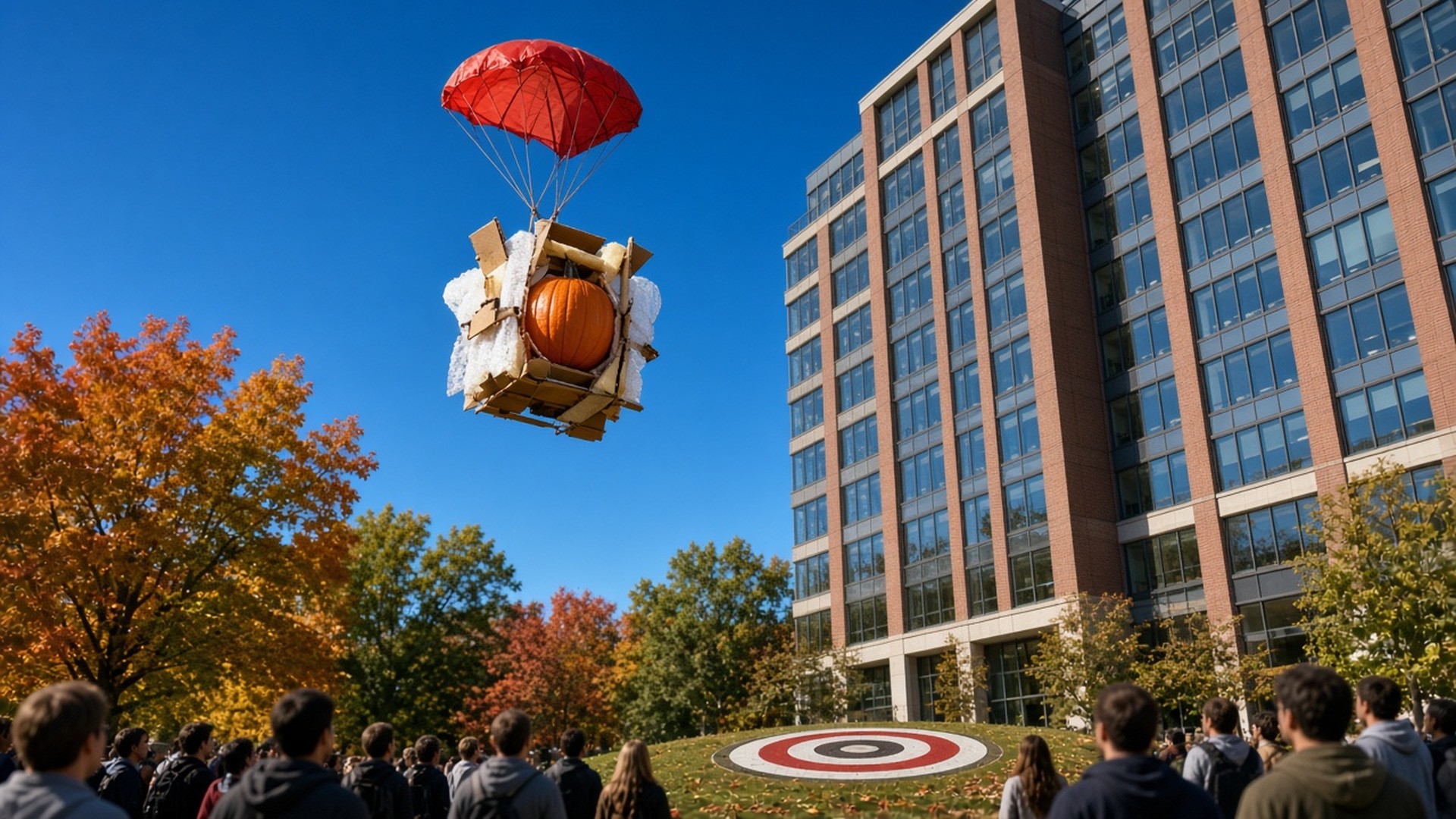
Friday morning in Morgantown, the sky over the Evansdale campus rained pumpkins, and nobody was complaining. West Virginia University held its 37th annual Pumpkin Drop outside the Engineering Sciences Building, where hundreds of student teams sent their pumpkins over the edge of the 11-story roof and hoped for the best.
More than 1,000 kindergarten through 12th grade students and their teachers came to campus for the day. Every team brought a homemade contraption built for one job: keep a pumpkin in one piece after a long fall, and land it as close as possible to a target painted on the ground below.
It sounds like Halloween fun, and it is, but it's also a real engineering problem. To pull it off, young builders have to think through gravity, air resistance, terminal velocity, momentum and the force of impact. Some teams go with parachutes to slow the fall, while others pile on padding and bracing and trust their design to absorb the hit.
The rules keep everyone honest. Each pumpkin has to be orange and at least 10 inches across, and the pumpkin plus its protective rig can't weigh more than 50 pounds. No freezing the pumpkin or filling it with chemicals, no bungee cords, and any parachute has to be 4 feet by 4 feet or smaller. Every entry has to free fall and land inside the drop zone, and the ground crew has to be able to pull the pumpkin out within 30 seconds of landing so judges can check whether it survived.
Winners are chosen from the surviving pumpkins that land closest to the target, with special recognition for the best and most creative protective designs. Teams paid a $10 entry fee per pumpkin, and registration was capped at the first 300 teams.
The whole thing started back in 1988 as a small project run by WVU's student chapter of the American Society of Mechanical Engineers. Nearly four decades later, it has grown into a regional fall tradition hosted by the Department of Mechanical, Materials and Aerospace Engineering in the Benjamin M. Statler College of Engineering and Mineral Resources, and for a lot of kids it's their first taste of what engineers actually do.
There's a big heart behind it, too. Registration proceeds from the event go to Ronald McDonald House Morgantown, which helps families stay close to their children while they receive medical care.
So if your kid came home Friday talking about parachutes, padding and splattered pumpkins, now you know why. Somewhere in that crowd looking up at the Engineering Sciences Building, there's a future engineer who just got hooked, and that's the kind of thing that makes West Virginia proud.
Share this article